Tiếng Việt

Vietnam’s coffee industry is facing a dual opportunity and challenge. The opportunity comes from a global market that increasingly favors high-quality products with sustainability certifications. The challenge arises from the production process itself—a process that consumes a vast amount of water and generates one of the most “difficult-to-treat” types of wastewater streams.
Are you struggling with:
- Operating costs for your wastewater treatment system being too high, eroding your profits?
- Your current system operating unstably, frequently encountering issues and causing legal risks?
- Valuable land for production having to be allocated for bulky treatment tanks?
- Increasing pressure from international partners regarding green standards (Rainforest Alliance, Fair Trade)?
If the answer is “Yes,” you are not alone. At NGO International, we turn these challenges into a competitive advantage for your business.
I. Roasted Coffee Production and Discharge Reduction Requirements
The coffee production process consumes a large amount of water resources and simultaneously generates a significant amount of wastewater and sludge into the environment. While there are many technologies and types of equipment for coffee wastewater treatment, not every factory has access to a solution that is truly suitable in terms of investment cost and emission reduction.
II. Roasted Coffee
In the roasted coffee production process, coffee beans, after harvesting, must undergo processing to remove the fruit pulp and dry the beans before roasting. There are two main processing methods: wet processing and dry processing. Each method involves different steps and has different impacts on the flavor and quality of the coffee.
a. Wet Coffee Processing Method:
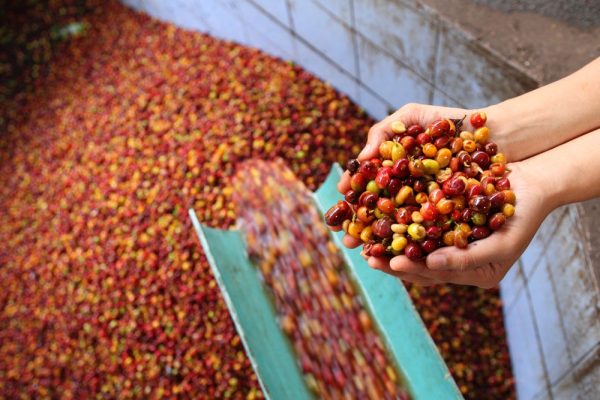

The wet coffee processing method is a complex process that requires the use of various machinery and consumes a significant amount of water, typically applied when processing Arabica coffee.
This method produces coffee beans with a bright, clean flavor and is often used for high-quality coffee types.
Process and Characteristics of Wastewater Generated from the Wet Method:
| Processing Stage | Task Performed | Wastewater Characteristics |
|---|---|---|
| 1. Harvesting | Coffee is harvested when the coffee cherries are ripe red. In Vietnam, harvesting methods are typically selective harvesting (hand-picking ripe cherries) or strip harvesting (picking both ripe and unripe cherries). |
– Roasted coffee processed by the wet method typically generates a larger volume of water than other methods. – Wastewater generated from production activities has a high concentration of pollutants, mainly from the bean processing stages of soaking, pulping, fermentation, and washing:
– Wastewater from cleaning workshops and equipment: This wastewater mainly comes from washing and cleaning equipment and the workshop area.
|
| 2. Wet Bean Processing | – Step 1: Soaking and Sorting Cherries – Step 2: Pulping (Removing Skin and Pulp) – Step 3: Fermentation – Step 4: Washing |
|
| 3. Drying | After pulping, the coffee beans must be sun-dried or mechanically dried to reduce the moisture content to around 10-12% to prevent mold or spoilage during storage. | |
| 4. Hulling and Sorting | – After the coffee beans are dried, the hulling process begins. The beans are fed into hulling machines to remove the parchment layer, leaving only the green coffee beans. – The green coffee beans are then sorted based on size, weight, and quality to ensure uniformity before roasting. |
|
| 5. Roasting | The green coffee beans are placed in a roaster at a temperature of about 180-240°C for 8 to 20 minutes (depending on the coffee type and roast profile). | |
| 6. Cooling and Degassing | – The beans can be air-cooled or water-quenched (for certain roasting methods). – After cooling, the coffee needs a degassing period (from 24 to 48 hours) for the flavors to stabilize. |
|
| 7. Grinding | Roasted coffee can be ground into powder (fine, medium, coarse grind) or left as whole beans depending on the intended use. | |
| 8. Packaging | Roasted and ground coffee, after being ground or kept as whole beans, is sealed in packages for preservation. |
b. Dry Coffee Processing Method:
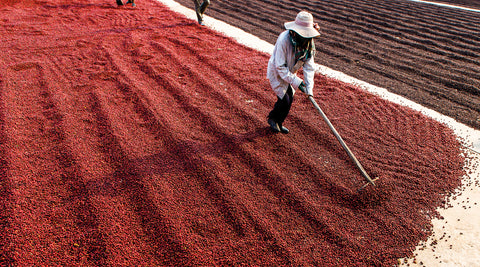
Dry processing, also known as the natural method, is a more traditional and simpler method. Dry-processed coffee often has a sweet flavor, full body, and intense fruity notes.
In Vietnam, roasted coffee is mainly processed using two common methods: the wet processing method and the dry processing method. However, the dry processing method remains the primary and more popular method, especially for the Robusta coffee variety, which accounts for the majority of coffee production in Vietnam (about 90% of total output).

Process and Characteristics of Wastewater Generated from the Dry Method:
| Processing Stage | Task Performed | Wastewater Characteristics |
|---|---|---|
| 1. Harvesting | Coffee is harvested when the coffee cherries are ripe red. In Vietnam, harvesting methods are typically selective harvesting (hand-picking ripe cherries) or strip harvesting (picking both ripe and unripe cherries). |
– Roasted coffee processed by the dry method typically generates less water than other methods because the dry method relies mainly on natural sun-drying without using water in the main processing steps. – Wastewater is generated mainly from cleaning workshops and equipment: In large processing facilities, periodic cleaning of machinery and floors can create a certain amount of wastewater containing dirt, coffee residue, and impurities from the production process.
|
| 2. Dry Bean Processing | – Step 1: Drying the Whole Cherry – Step 2: Hulling – Step 3: Cleaning and Sorting |
|
| 3. Drying | After hulling, the coffee beans must be sun-dried or mechanically dried to reduce the moisture content to around 10-12% to prevent mold or spoilage during storage. | |
| 4. Hulling and Sorting | – After the coffee beans are dried, the hulling process begins. The beans are fed into hulling machines to remove the parchment layer, leaving only the green coffee beans. – The green coffee beans are then sorted based on size, weight, and quality to ensure uniformity before roasting. |
|
| 5. Roasting | – The green coffee beans are placed in a roaster at a temperature of about 180-240°C for 8 to 20 minutes (depending on the coffee type and roast profile). | |
| 6. Cooling and Degassing | – The beans can be air-cooled or water-quenched (for certain roasting methods). – After cooling, the coffee needs a degassing period (from 24 to 48 hours) for the flavors to stabilize. |
|
| 7. Grinding | Roasted coffee can be ground into powder (fine, medium, coarse grind) or left as whole beans depending on the intended use. | |
| 8. Packaging | Roasted and ground coffee, after being ground or kept as whole beans, is sealed in packages for preservation. |
III. Limitations of Current Wastewater Treatment Solutions for Roasted Coffee Production
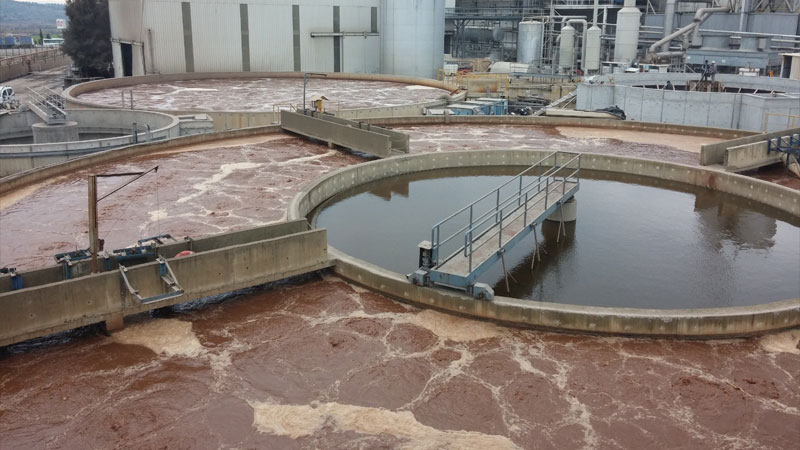
Current wastewater treatment methods for roasted coffee production typically combine the following treatment processes:
- Mechanical treatment (sedimentation, filtration) to remove suspended solids.
- Physico-chemical treatment (coagulation, oil and grease separation) to remove insoluble substances and oils.
- Biological treatment (aerobic, anaerobic) to treat organic substances.
- Membrane filtration technology to enhance the quality of the treated wastewater.
Current coffee wastewater treatment methods can handle most pollutant concentrations to meet environmental discharge standards and are applied in many coffee production facilities in Vietnam. However, considering various factors including treatment efficiency, cost, feasibility, and environmental impact, there are still many limitations:
– Requires a large area to construct treatment tanks, which can be a challenge for businesses where land needs to be prioritized for production.
– Large volumes of wastewater and high monthly discharge fees to industrial parks/clusters are a significant expense.
– A large amount of sludge is generated that requires subsequent disposal, further increasing treatment costs.
– Biological treatment methods are quite sensitive to fluctuations in pollutant loads, causing many factories to face operational difficulties and frequent incidents.
– High energy consumption, which indirectly increases greenhouse gas emissions.
IV. The Solution from NGO International Co., Ltd
We understand that businesses are striving to increase their competitiveness in the market and need to meet increasingly high demands for Sustainable Development, including standards such as Rainforest Alliance, UTZ Certified, and Fair Trade.
NGO has spent years collecting operational data from coffee production plants in Vietnam, as well as operational data from coffee wastewater treatment plants, to research and develop a solution focused on energy saving and resource reuse:
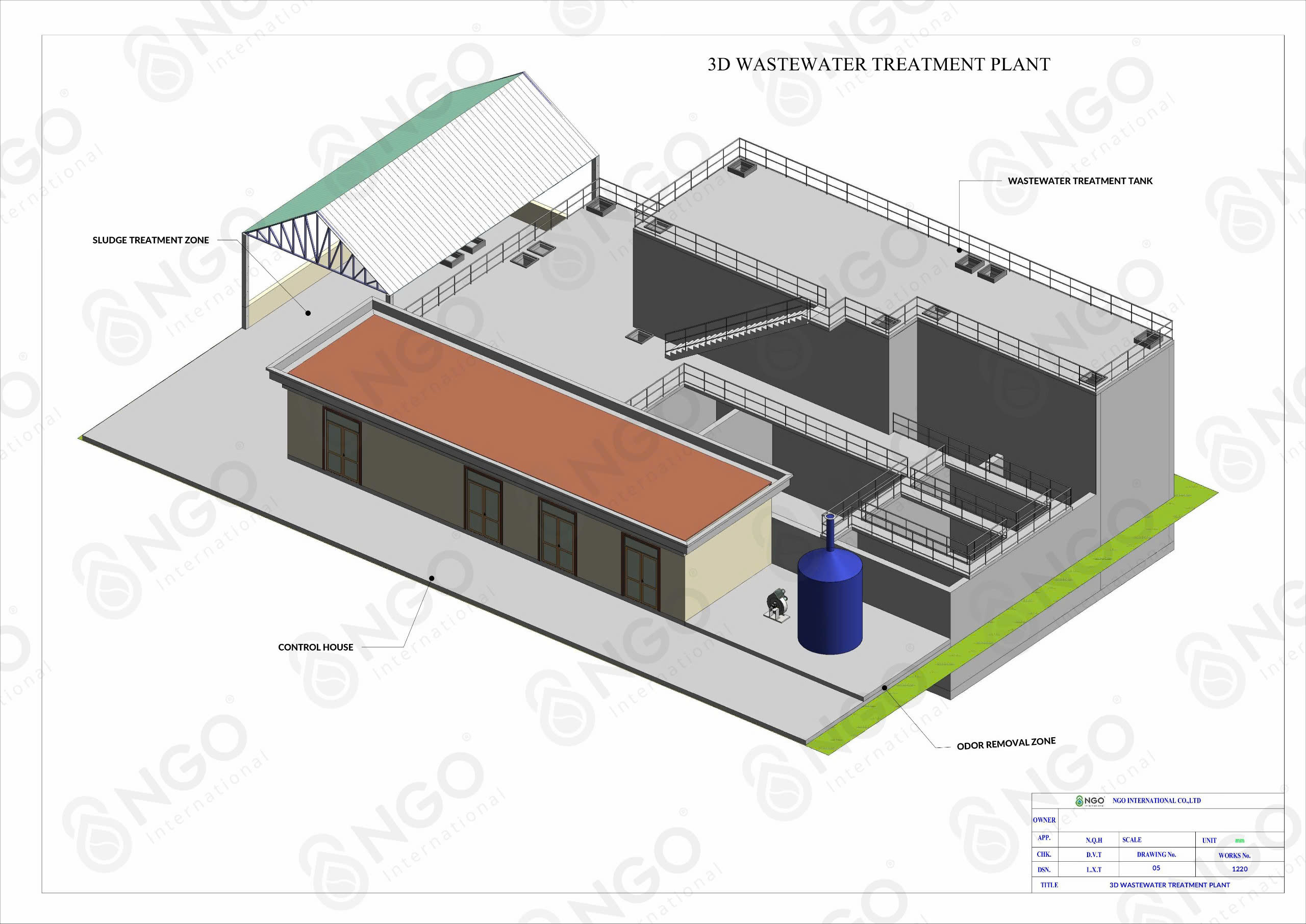
– Saving Land Resources: The wastewater treatment plant is designed with high efficiency, allowing for a 50% reduction in the construction footprint.
– Energy Saving: For plants with high pollutant concentrations (COD ~ 10,000 – 20,000 mg/L), we guarantee that power consumption will always be lower than 3 kWh/m³.
– Saving Water Resources and Reducing Sludge:
- Reuse of treated water: NGO will advise on various options for reusing wastewater at the plant, ensuring that the total water consumption per ton of product is optimized.
- Reduction and recycling of sludge from production: The treatment plants will focus on reusing sludge to produce fertilizer or recycling it into raw materials, helping to minimize waste discharged into the environment and supporting a circular economy model.
– Reducing Chemical Use: Utilizing biological treatment methods with high tolerance to input fluctuations, which helps stabilize the entire system’s operation and minimize emissions and negative environmental impacts.
– Enhancing Climate Change Adaptability
Resilience and adaptation to climate change: The design of future wastewater treatment plants must consider the ability to withstand changes in weather and climate, such as heavy rain, floods, or droughts, ensuring stable operation under harsh conditions.
V. Case Study
- The Challenge: A wet processing plant with a capacity of 500 tons of fresh cherries per season. The old system was frequently overloaded, the effluent did not meet QCVN standards, and monthly electricity and sludge disposal costs amounted to 80 million VND.
- NGO’s Solution: We designed and installed a combined system of anaerobic UASB and aerobic MBBR technology.
- The Results:
- Effluent quality consistently meets Column A of QCVN 40:2011/BTNMT.
- 60% reduction in operating costs (electricity, chemicals).
- 50% of water reused for floor washing and pre-processing areas.
- Sludge volume was significantly reduced and utilized as fertilizer for the company’s own coffee gardens.
- The factory confidently meets the standards of European customers.
“Since partnering with NGO International, we have had complete peace of mind regarding environmental issues. The new system is not only compact and cost-effective but also operates with extreme stability. Their team of experts is very knowledgeable about the coffee industry and provided us with an incredibly practical water reuse solution. This was a worthwhile investment.”
– Mr. N.T.L, Coffee Factory Director
VI. Frequently Asked Questions
The cost depends on many factors: capacity, processing method (wet/dry), influent water quality, and required effluent quality. Please contact us for a site survey and the most detailed, transparent quotation.
We prioritize highly automated solutions to minimize human intervention. NGO International will provide thorough training and technology transfer to your team until they can operate it proficiently.
Typically, it takes 3-6 months, depending on the scale and complexity of the project, including the design, construction, and commissioning phases.
Our solutions focus on sludge minimization and reuse. We will advise on options such as sludge dewatering, drying, and composting to turn sludge into a valuable resource.
Absolutely. Upgrading existing systems to improve efficiency and reduce operating costs is one of our strengths. This is often more cost-effective than building a new one.
Read more : https://ngoenvironment.com/vn/technology.html
NGO International Co., Ltd is committed to providing the most advanced and modern technologies to help businesses not only minimize discharge but also enhance production efficiency and protect the environment. Contact us to learn more about wastewater treatment solutions for roasted coffee production for your business via phone at 024.7300.0890 or email office@8ngo.com for a direct consultation.

***Please carefully read the Terms of Use – Copyright before copying or quoting the content and images of this website.
This website is copyrighted by NGO International Co., Ltd. Any form of use or duplication of part or all of the content in any form is strictly prohibited, except with express written permission from Us.